
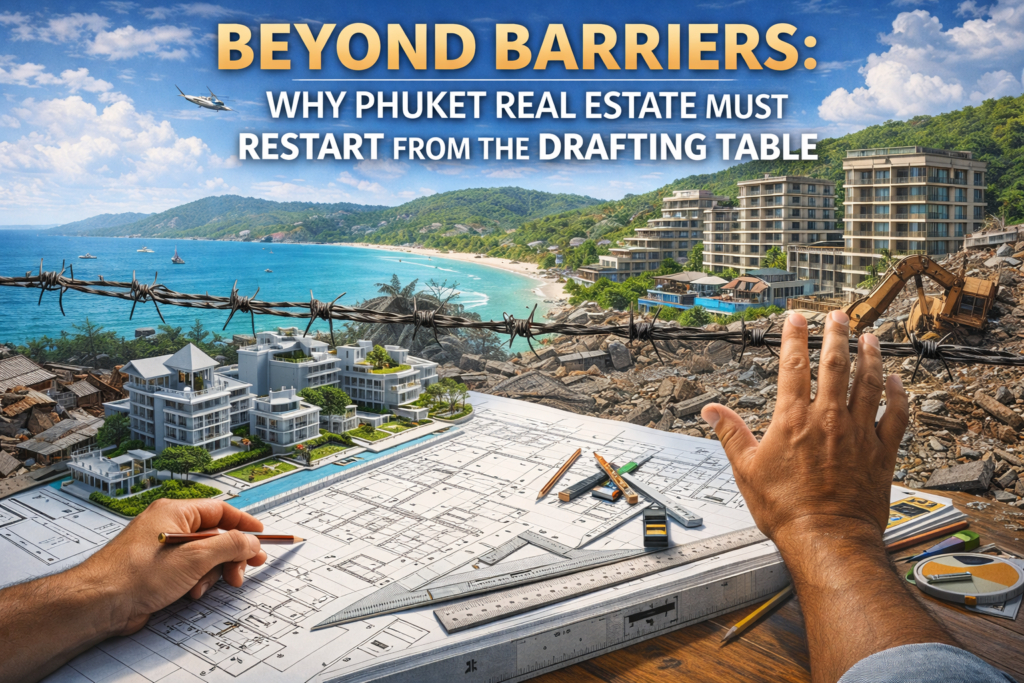
Phuket is currently at a historic crossroads. The island has evolved from a simple tropical getaway into a premier global hub for luxury living and international investment. However, as we look toward the future, a critical gap remains between global ambitions and the physical reality of our constructions. Despite high-end finishes and breathtaking views, Phuket still presents too many architectural barriers.
In a world moving toward total inclusivity, a destination of this prestige cannot afford to remain stagnant. To truly lead the market, the industry must stop treating accessibility as an “optional extra” and start treating it as a foundational pillar of design.
Regional Models: Competitors Already Setting the Course
It is not necessary to look far to understand that accessibility is a key factor in economic competitiveness. Neighboring markets and emerging hubs in the Middle East have already recognized that inclusion attracts capital:
Singapore: The city-state is the absolute benchmark for Southeast Asia. Through its rigorous “Code on Accessibility in the Built Environment,” it has proven that architectural innovation can eliminate every obstacle, creating a resilient real estate market capable of attracting investors from around the globe.
Dubai, UAE: With the “Dubai Becomes Accessible for Everyone” vision, this Middle Eastern metropolis is transforming every new real estate development into a model of inclusivity. By 2027, Dubai aims to be the most accessible city in the world, recognizing that global leadership requires universal accessibility.
Kuala Lumpur, Malaysia: The city is investing heavily in improving residential accessibility to capture the growing “Retirement Visa” market, where the absence of barriers is a primary requirement for international investors.
The “Afterthought” Trap: The Role of Design
The most common mistake found today is viewing accessibility as a “post-construction fix.” Too often, extraordinary complexes are designed, and only at the very end is it considered how an elderly person or a guest with limited mobility might navigate the space.
This approach leads to solutions that are aesthetically unpleasing and functionally limited. Inclusivity must be born from the architect’s first pencil stroke. It is essential for the industry to return to the drafting tables: fluid movement and barrier-free access must be an integral part of a building’s DNA from its very conception.
A Collective Commitment: The Road to Change
For Phuket, overcoming architectural barriers cannot be the initiative of a single individual; it must become a unified commitment from trade associations, developers, and professionals. It is necessary to join forces to:
Define Standards of Excellence: Surpassing the legal minimums required by current regulations to make Phuket an international benchmark in Southeast Asia.
Promote Technical Dialogue: Establishing forums for discussion between architects and developers to demonstrate that a barrier-free property has broader market appeal, attracting young families, affluent retirees, and institutional investors.
Invest in Training: Educating the entire production chain so it is understood that the precision of a threshold or the width of a doorway are the details that transform a simple house into a long-term, high-value investment.
The Economic Reality: Inclusion as a Smart Investment
The market in 2026 has profoundly changed. Today’s investors seek residences where they can age with dignity or accommodate multi-generational families. A property that is inaccessible today will be considered obsolete within a few years. Building without barriers means, ultimately, protecting investor assets and ensuring the long-term economic sustainability of the island.
Phuket has all the tools necessary to compete with giants like Singapore and Dubai. But to do so, it is fundamental to break down the mental barriers of those who design and build. Only through shared education and a common commitment can we ensure that Phuket remains a leading, equitable, and cutting-edge destination on the world stage.